
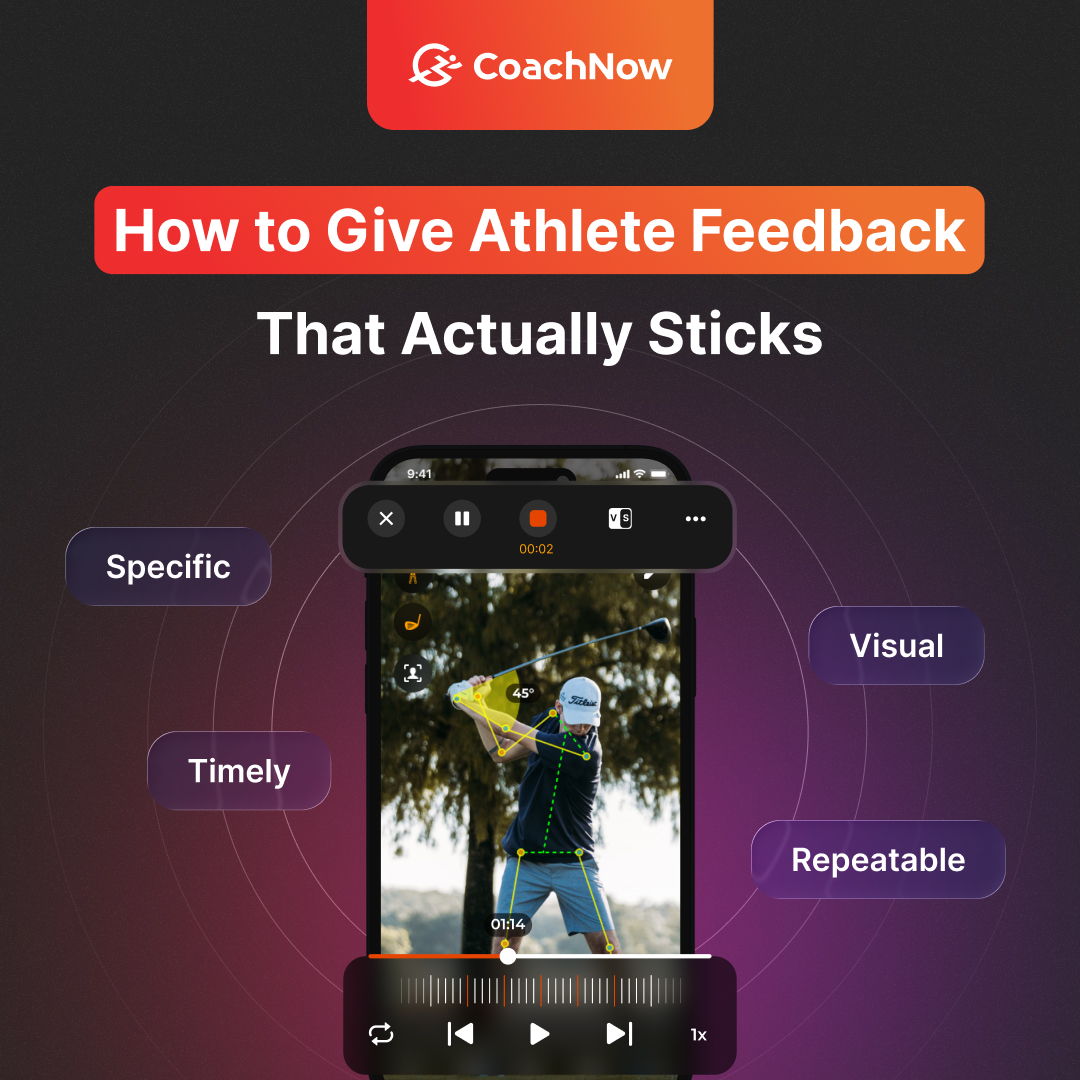
You've said it a hundred times.
The same cue. The same correction. The same explanation, but your athlete keeps making the same mistake.
Sound familiar?
Here's the thing: the problem usually isn't what you're saying. It's how, when, and in what format you're delivering it.
Feedback is the core of what coaches do. But giving feedback that athletes actually absorb, remember, and apply? That's a skill that most coaches never get formal training on it.
This is your framework.
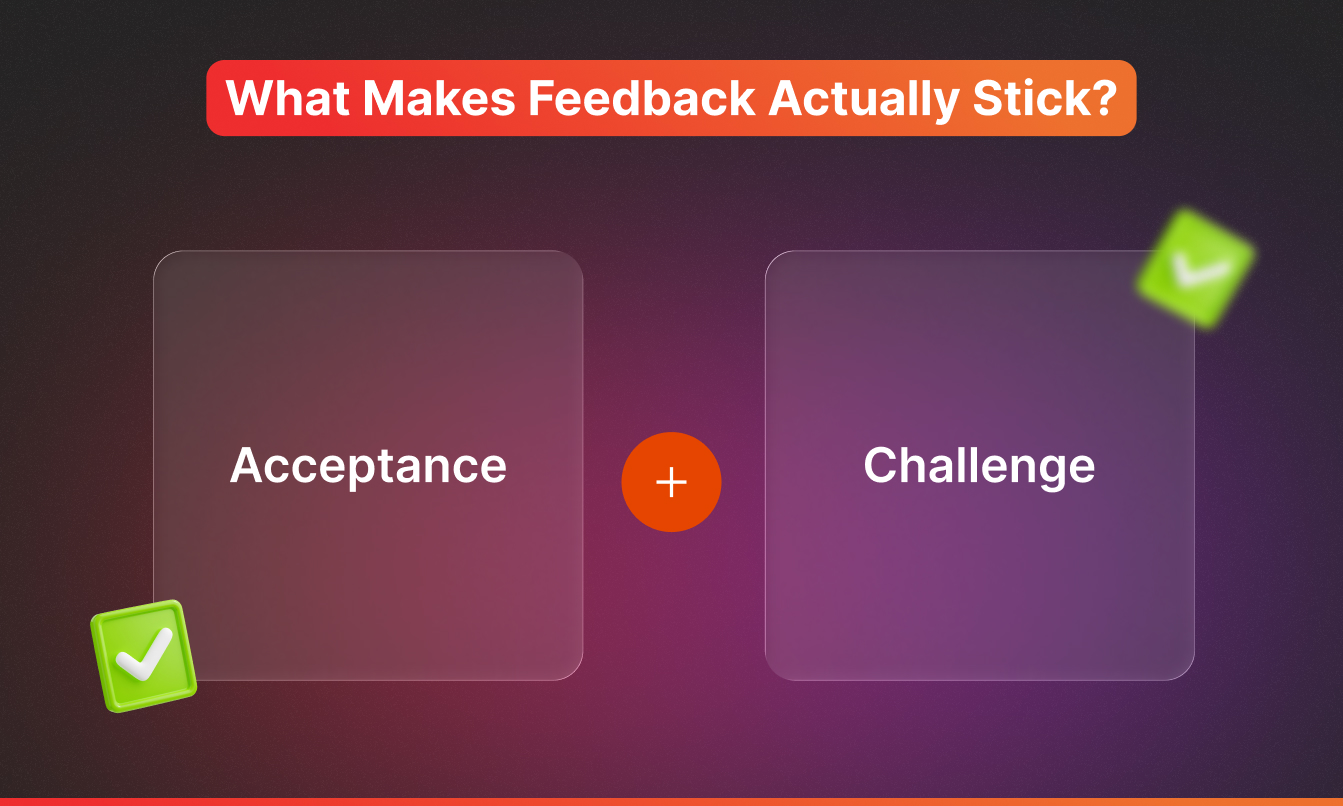
What Makes Feedback Actually Stick?
Before we get into the how, let's talk about why feedback so often fails to land.
The most effective coaching communication combines two things: acceptance and challenge.
Acceptance validates the athlete, acknowledging and reinforcing what they're doing well. Challenge pushes them toward what's possible, but only when it's paired with belief in their ability to get there.
Feedback that's all challenge with no acceptance creates anxiety and resistance. Feedback that's all acceptance with no challenge creates stagnation.
Great feedback does both. And it does a few other things too.
Effective athlete feedback is:
-
Specific — it targets one thing, not everything at once
-
Visual — athletes understand and retain information better when they can see it, not just hear it
-
Timely — delivered close enough to the performance that the athlete can connect it to what they felt
-
Repeatable — accessible more than once so the athlete can revisit it when they need it
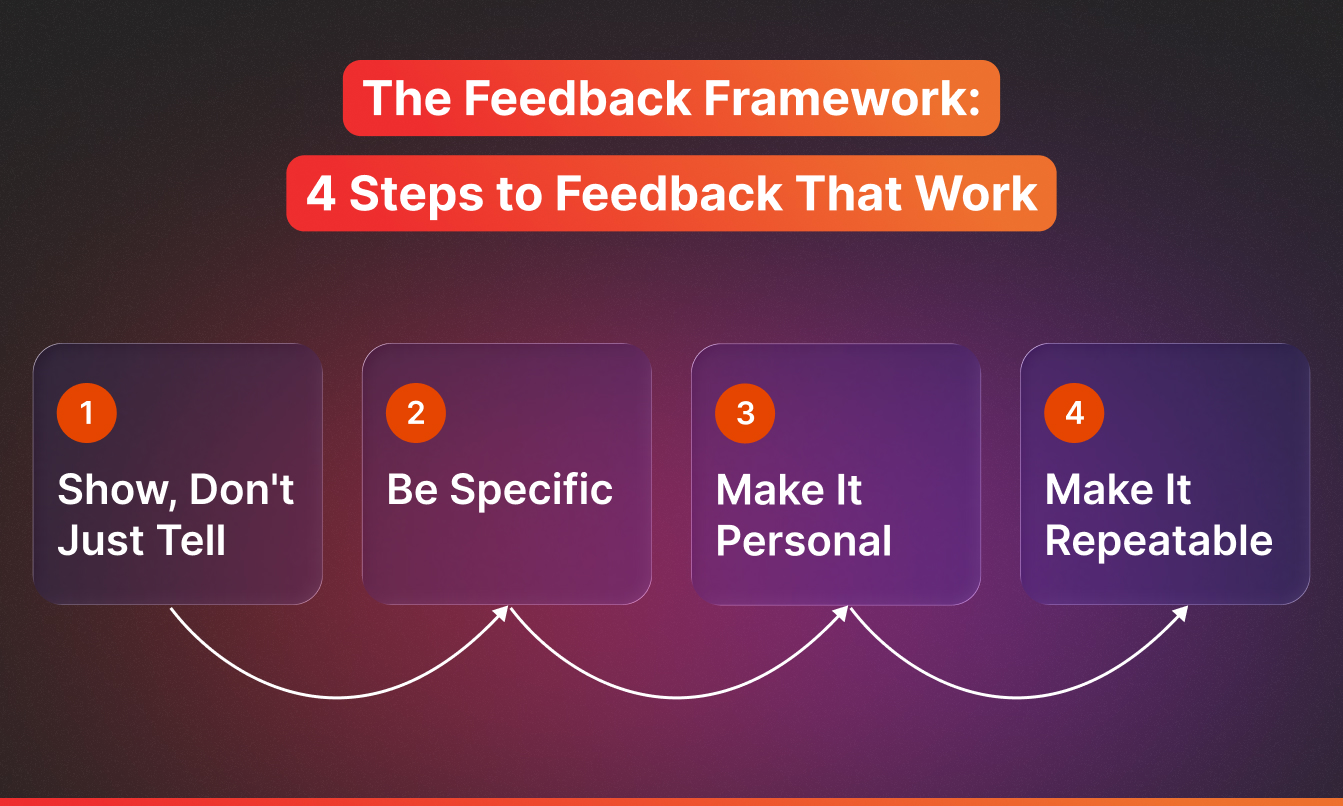
The Feedback Framework: 4 Steps to Feedback That Work
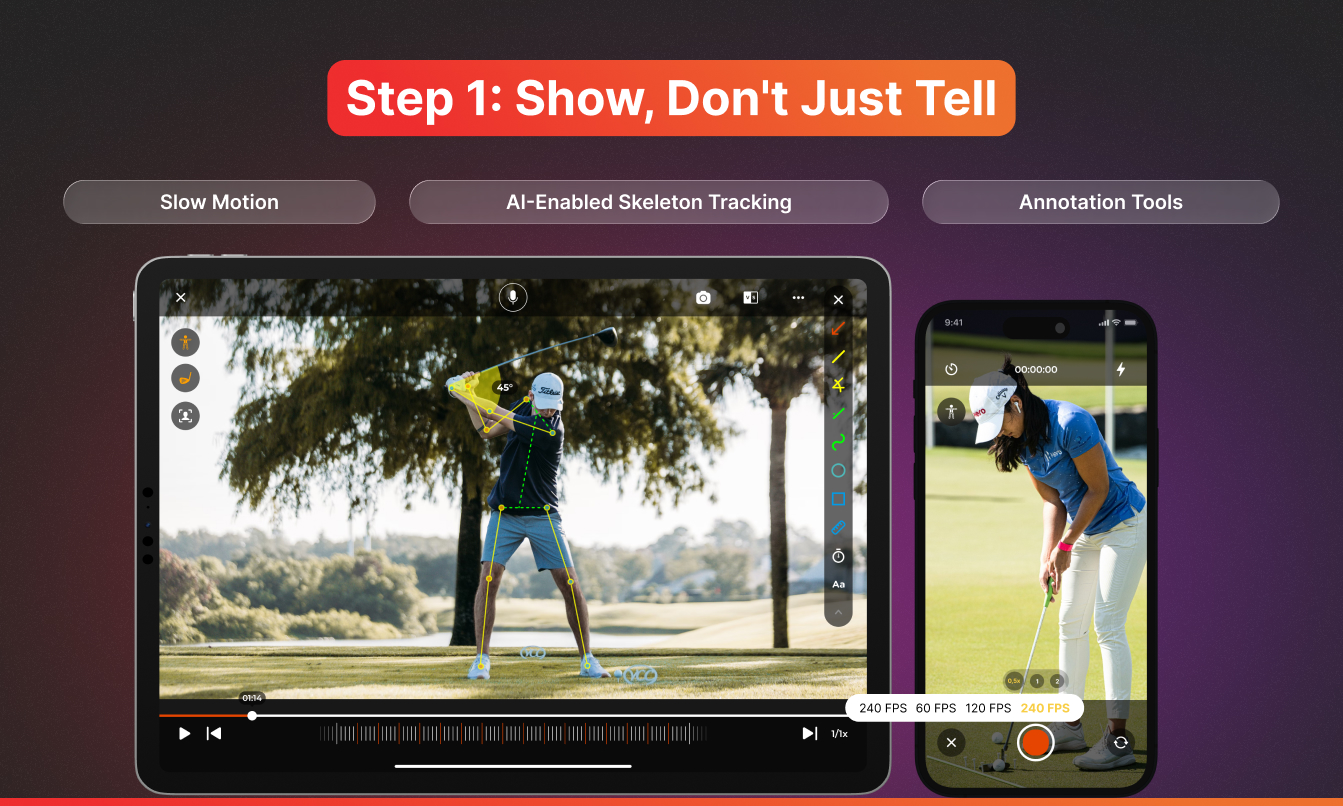
Step 1: Show, Don't Just Tell
Verbal feedback is the most common coaching tool and often the least effective on its own.
Think about it from the athlete's perspective. You're describing a movement they can't see themselves make, using words that may mean something completely different in their mind than yours.
Visual feedback closes that gap immediately.
When athletes can see their own movement (especially slowed down or annotated), the feedback becomes undeniable. There's no room for misinterpretation - they see what you see.
This is exactly why video analysis has become one of the most powerful tools in a coach's toolkit. And with CoachNow, delivering visual feedback is as simple as uploading a clip and tapping the screen.
Use Slow Motion to slow the movement down to 240 FPS so the athlete can see the micro-detail you're referring to. AI-Enabled Skeleton Tracking allows you to overlay a visual map of their body so joint angles and movement patterns become crystal clear. Draw directly on the video with Annotation Tools to circle, highlight, or trace exactly what you want them to focus on.
When your athlete can see the thing you're describing, the feedback clicks every time.
Step 2: Be Specific
This is the mistake almost every coach makes at some point: trying to fix everything at once.
An athlete submits a video or finishes a drill, and you see five things that need work. So you tell them all five and they walk away overwhelmed, unsure what to prioritize, and more confused than when they started.
Pick one thing at a time.
Specificity isn't just about being clear, it's about making your feedback actionable. An athlete can focus on one correction and immediately know whether they've applied it or not.
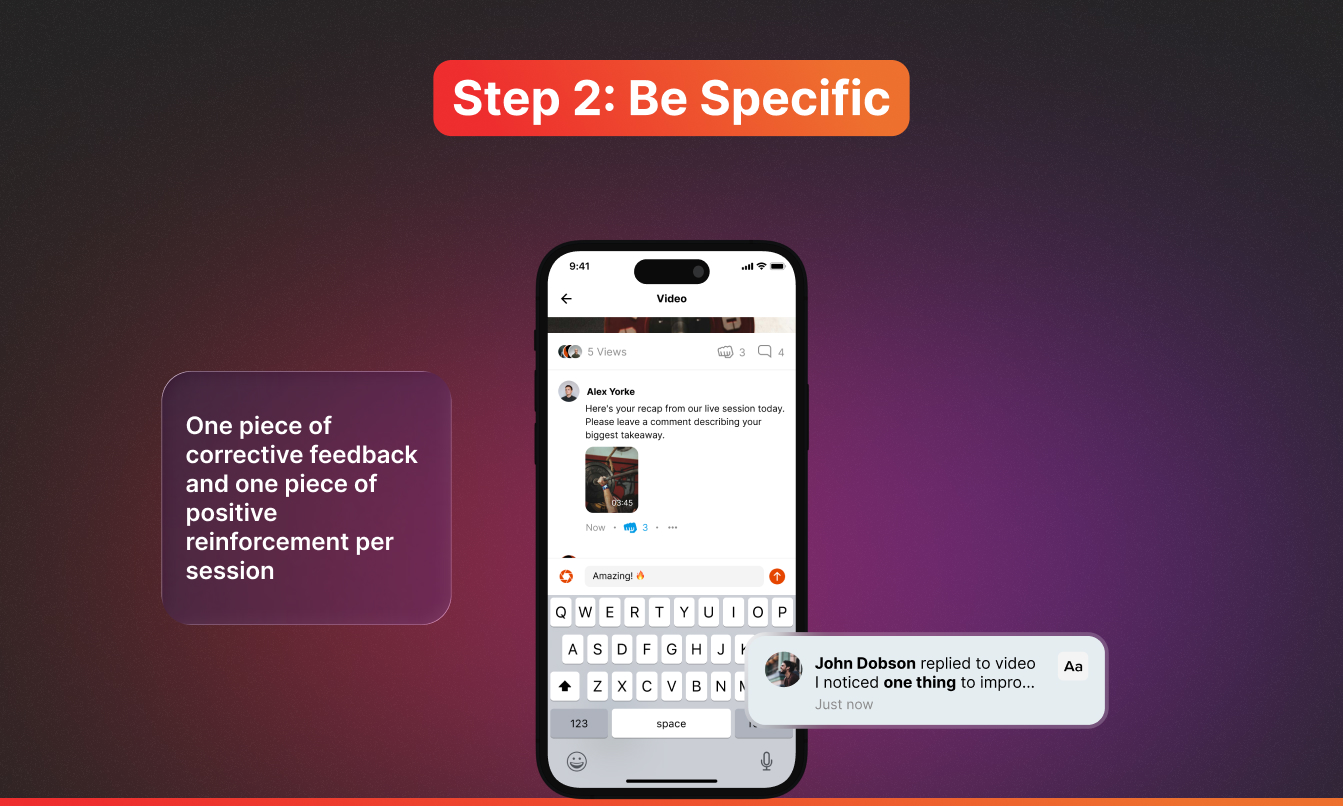
A good rule of thumb is to give one piece of corrective feedback and one piece of positive reinforcement per session. This keeps athletes motivated and gives each correction the attention it deserves.
When you're working in CoachNow, this is easy to practice. Instead of writing a long comment or recording a lengthy voice-over, commit to covering one specific thing in each post.
Step 3: Make It Personal
Generic feedback is forgettable.
Personalization signals to your athlete that you're paying attention, and that signal matters more than most coaches realize.
Here’s what makes feedback feel personal:
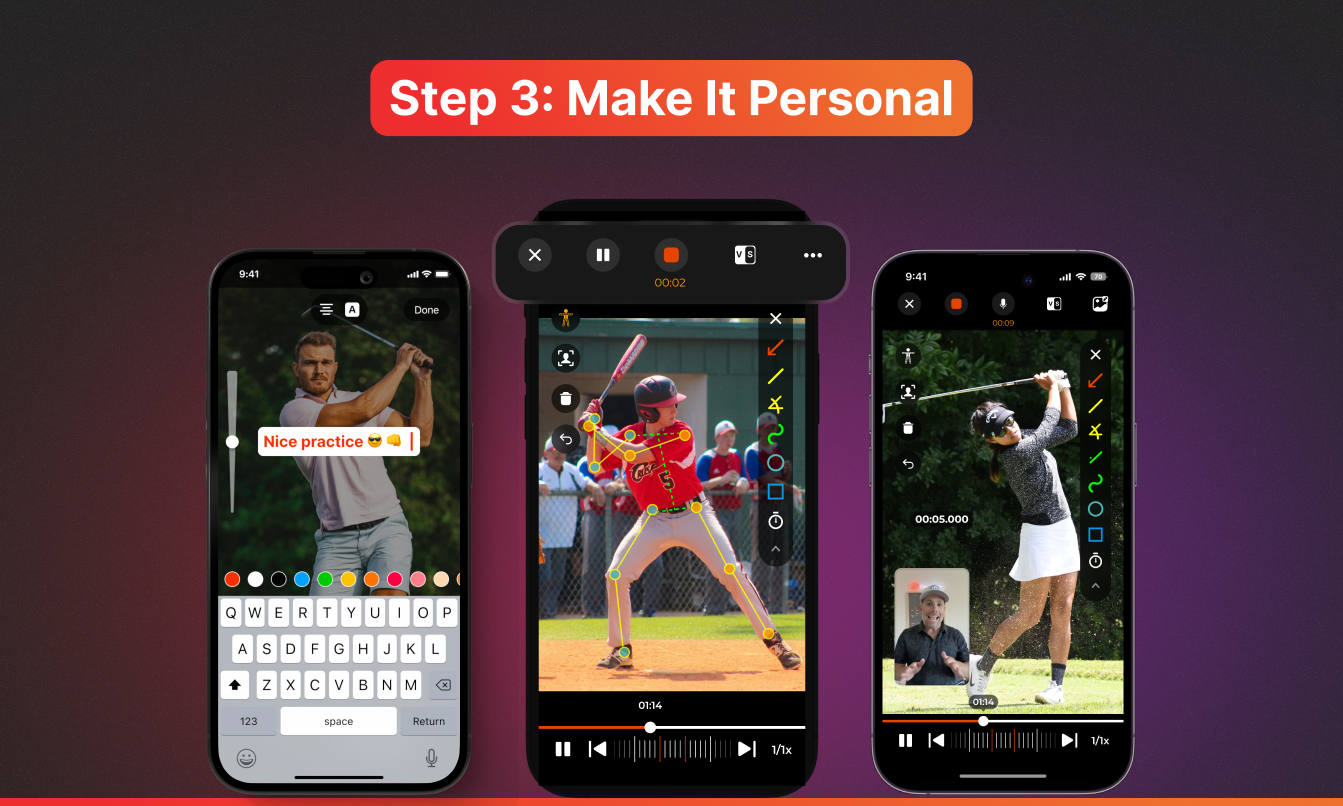
When an athlete hears your tone, your emphasis, and your genuine reaction to what they've done well, it lands differently than a typed comment. CoachNow's Voice Over feature lets you record directly onto any video or photo, so your feedback always carries your coaching personality, not just your words.
You can also flip on CoachCam to record yourself delivering the feedback alongside the analysis. Your athlete gets to see your expression and your belief in them, which makes a huge difference when they’re training.
Step 4: Make It Repeatable
Here's something most coaches don't think about: the best feedback isn't just heard once.
An athlete might watch your feedback the day you send it, then again the night before their next session, then again mid-practice when they need a reminder of the cue you gave them. Every time they revisit it, the correction gets reinforced.
But only if it's easy to find.
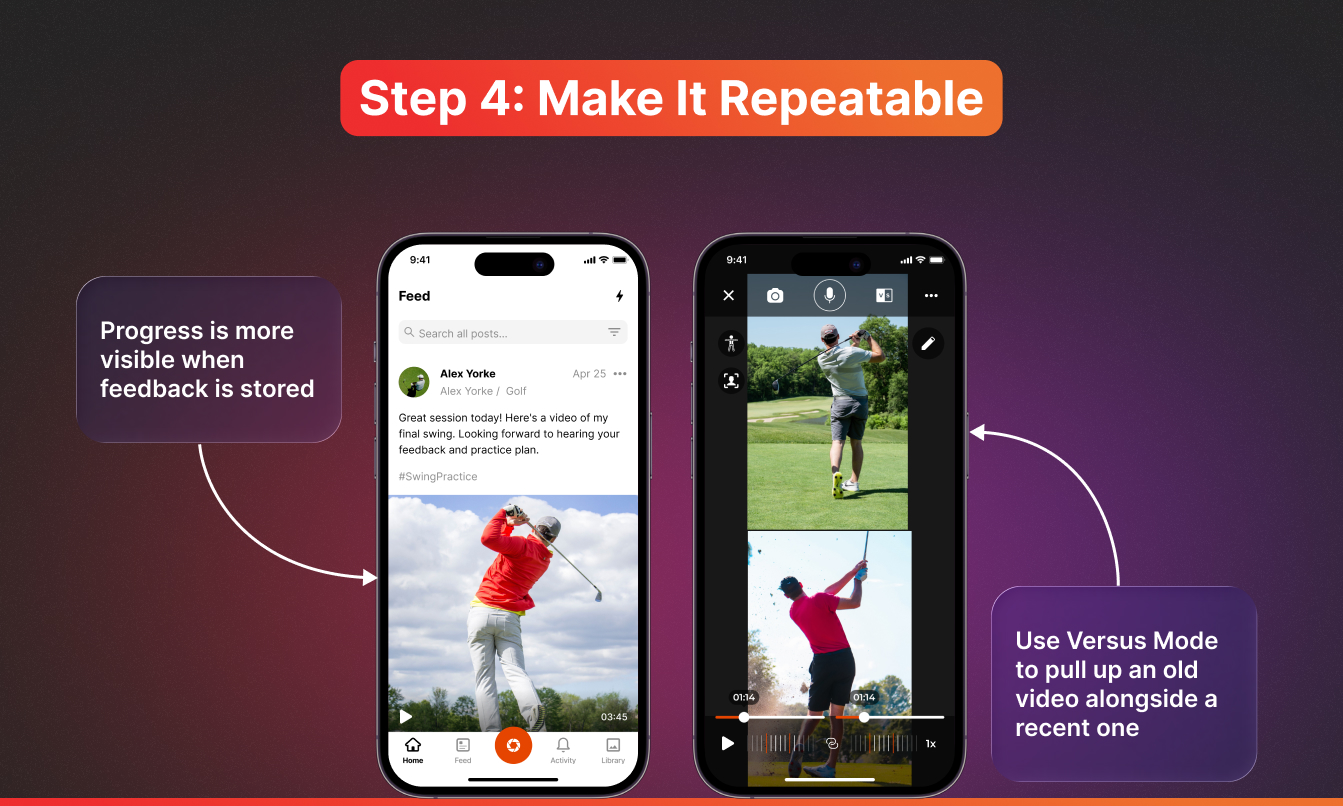
With CoachNow, every piece of feedback you deliver lives in a dedicated Space: a private, organized channel between you and your athlete. Every video, voice-over, annotation, and analysis is stored and searchable. Your athlete can pull up feedback from three months ago in seconds.
Progress is also more visible when feedback is stored. Use Versus Mode to pull up an old video alongside a recent one. Let your athlete see the difference between where they started and where they are now. That kind of evidence is motivating in a way that words alone never can be.
A Quick Note on Timing
The framework above works best when the feedback is delivered close to the performance, ideally on the same day.
Timely feedback leads to faster adjustments and stronger retention, since the athlete's body still remembers the movement and their mind is still processing the session.
With CoachNow, this is easy. Athletes can submit their video immediately after a session. You can review it, annotate it, and send back a voice-over in minutes, from anywhere.
Putting It All Together: The Framework at a Glance
Here's the short version for quick reference:
-
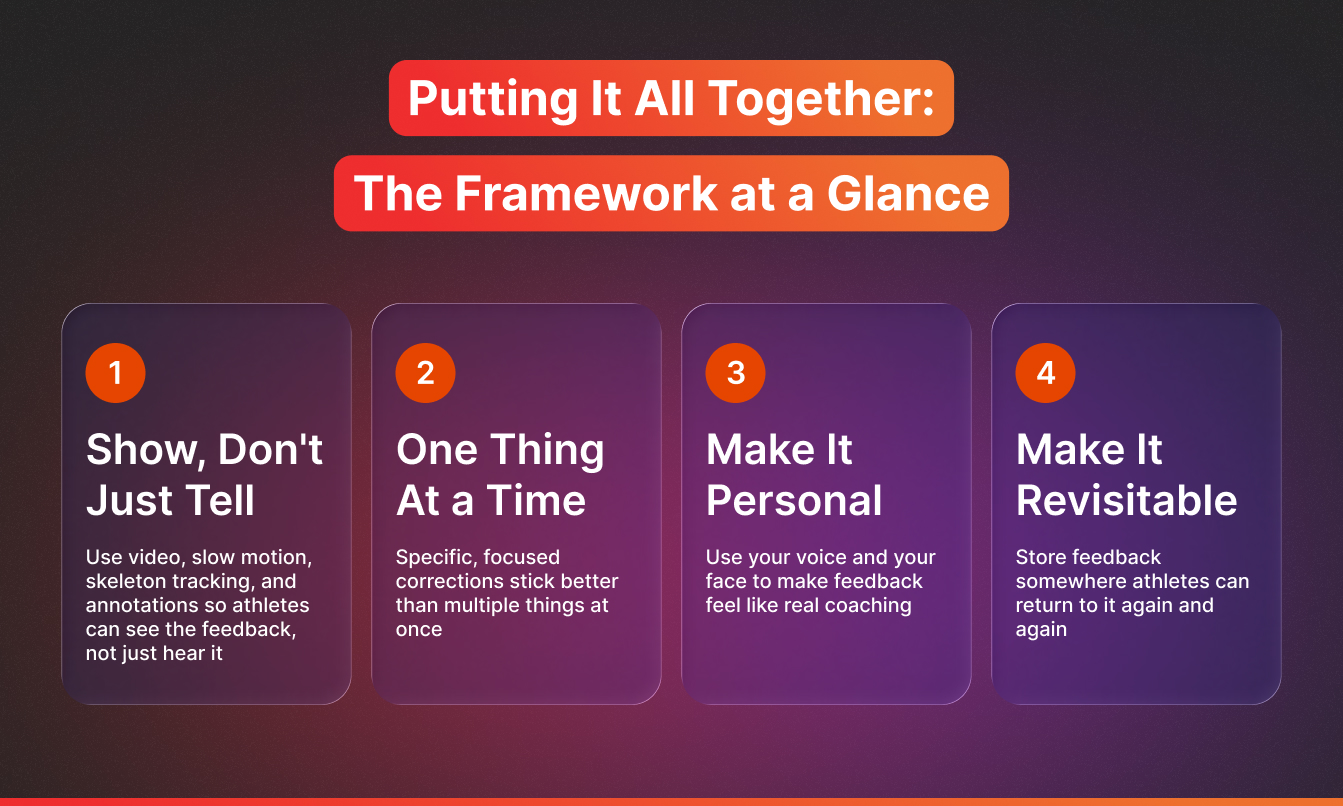
Show, don't just tell: use video, slow motion, skeleton tracking, and annotations so athletes can see the feedback, not just hear it
-
One thing at a time: specific, focused corrections stick better than multiple things at once
-
Make it personal: use your voice and your face to make feedback feel like real coaching
-
Make it revisitable: store feedback somewhere athletes can return to it again and again
Combine these four steps consistently and your feedback stops being something athletes forget by the time they leave the session and starts being something that actually changes how they move.
The Bottom Line
Giving great feedback isn't about saying more, it's about communicating better.
The coaches who see the fastest improvement in their athletes are the ones who figure out how to get their knowledge across clearly, specifically, and in a way that stays with the athlete long after the session is over.
Frequently Asked Questions
What is the most effective way to give feedback to athletes?
The most effective athlete feedback is specific, visual, timely, and easy to revisit. Combining video analysis with voice feedback, rather than relying on verbal or written communication alone, significantly improves how well athletes understand and retain coaching cues.
How often should coaches give athletes feedback?
Consistent, frequent feedback tends to outperform infrequent, lengthy feedback sessions. Short, focused feedback delivered after each session, even if it covers just one thing, builds better habits over time than monthly or quarterly check-ins.
Does video feedback actually help athletes improve faster?
Yes. Research supports that athletes learn and retain technique corrections more effectively when they can see their own movement rather than simply hearing a description of it. Video feedback removes the guesswork and makes corrections concrete.
What is the difference between positive and corrective feedback in coaching?
Positive feedback reinforces what the athlete is doing well and builds confidence. Corrective feedback addresses what needs to change. The most effective coaching combines both - validating the athlete while still challenging them to improve.
How do I give feedback to a remote athlete?
Remote coaching feedback works best when it's delivered through video, not just text or voice messages. Platforms like CoachNow allow coaches to annotate video, record voice-overs, and deliver organized feedback that athletes can access and revisit from anywhere.