
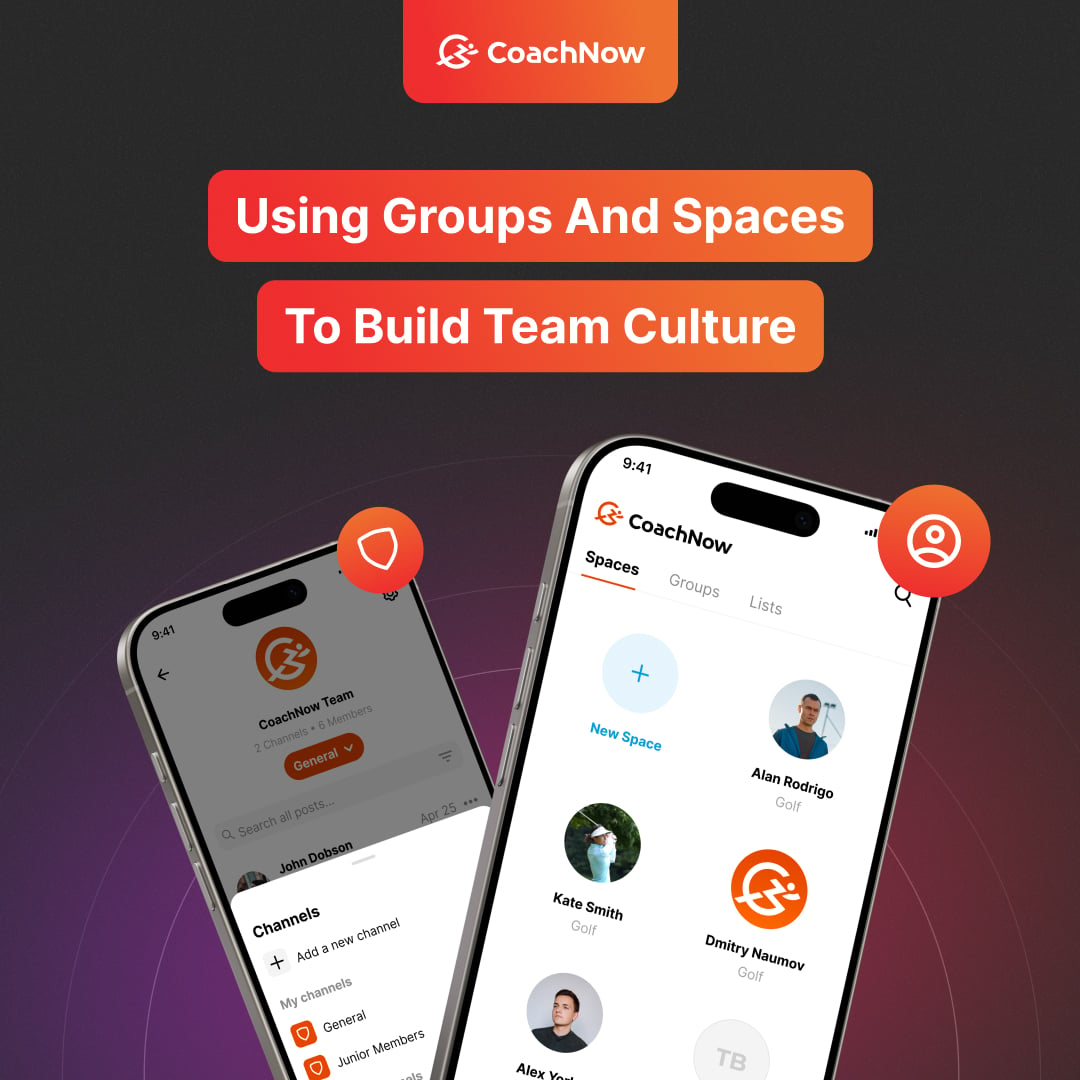
Most coaches think of CoachNow as a way to break down a swing, review game film, or track an athlete's progress from week to week. That's true, and it's a big part of why coaches love the platform. But Groups and Spaces weren't built just to move data. They were built to move relationships forward, and that's where team culture actually lives.
If you're only using CoachNow to post drills and log stats, you're using half the tool.
Here's how to use the other half.
.jpg?width=1343&height=806&name=Groups%20and%20Spaces%20(2).jpg)
Spaces Are Where Trust Gets Built
A Space is often set up as a private, one-on-one channel between a coach and an athlete, the natural home for technical feedback. But because parents, assistant coaches, or mentors can be added into that same Space, it quietly becomes something bigger: a shared support system around one athlete's development.
An athlete who sees their coach, a parent, and maybe a strength trainer all in the same conversation, reacting to the same video and encouraging the same effort, experiences coaching as a team effort.
Try using a Space for more than corrections:
Post a quick voice note after a tough loss, not just a fix for next time. Ask an athlete to post their own reflection on a game, not just their coach-assigned drill.
When athletes post into their own Space instead of just receiving feedback, it turns coaching into a conversation. That's the difference between an athlete who feels managed and one who feels mentored.
.jpg?width=1343&height=806&name=Groups%20and%20Spaces%20(3).jpg)
Groups Are Where Identity Gets Built
Most coaches set up Groups around scheduling, Game Day Plans, Team Goals. That's smart organization. It's also a missed opportunity if it stops there.
Consider adding Groups that have nothing to do with performance at all:
A "Team Wins" Group where anyone can post a highlight or a personal milestone. A "Leadership Group" limited to team captains, where they can workshop how to support teammates.
These don't track a single metric. What they do is give a team a shared identity that exists independent of their results, which tends to produce better performance too.
.jpg?width=1343&height=806&name=Groups%20and%20Spaces%20(4).jpg)
Why This Matters for Retention
Culture isn't optional; it's a retention strategy. Athletes and parents don't just pay for skill development. They stay for how it feels to be part of something. A team where the Groups feed is full of encouragement and shared moments, not just assignments, is a team people don't want to leave, and a program that's easier to fill next season.
For coaches building a business, this is also important. Anyone can post a drill, but not every coach builds a community an athlete is proud to be part of.
.jpg?width=1343&height=806&name=Groups%20and%20Spaces%20(5).jpg)
FAQs
What's the difference between a CoachNow Space and a CoachNow Group?
A Space is a private, one-on-one channel between a coach and an individual athlete, typically used for personalized feedback and video review. A Group is a shared channel for a whole team or roster, used for team-wide communication like schedules, game plans, and team goals. Spaces build individual trust; Groups build team identity.
Can parents or other coaches be added to a CoachNow Space?
Yes. A Space can include additional people beyond the primary coach and athlete, such as a parent, assistant coach, or outside mentor, so they can see feedback and progress in the same conversation instead of getting updates secondhand.
How can coaches use CoachNow Groups for team bonding instead of just logistics?
Coaches can create Groups that aren't tied to a specific metric or task, such as a "Team Wins" channel for celebrating milestones, a "Culture Corner" for team traditions, or a "Leadership Group" for team captains. These give athletes a shared identity that goes beyond schedules and performance tracking.
Does building team culture actually improve athlete retention?
Yes. Athletes and parents often stay with a program not just for skill development but for the sense of belonging it provides. Teams that use Groups for encouragement and shared moments, not just assignments, tend to retain athletes and refill rosters more easily than teams that use the platform purely for logistics and stats.
What's a simple first step for a coach who only uses CoachNow for drills and stats?
Start small: rename one existing task-based Group to a culture-based one and seed it with the first post, or add one non-coaching voice, like a parent or assistant, into a Space to shift its tone from purely corrective to supportive.