

When it comes to coachability, every coach has had experiences both with athletes who won’t take feedback and with those who are always asking questions.
No matter what natural gifts either athlete has, you already know which one progresses faster.
The thing that separates the athlete who improves from the one who stagnates is coachability. And since coachability is a skill, it can be developed.
Let’s dive in.

What Is Coachability?
Simply put, coachability is how well an athlete seeks out, absorbs, and actually acts on the feedback they receive.
In other words, it's not about being agreeable or easy to manage. It's about having the specific habits and attitudes that allow coaching to actually land and translate into real progress.
Let’s take a closer look at what that actually means.
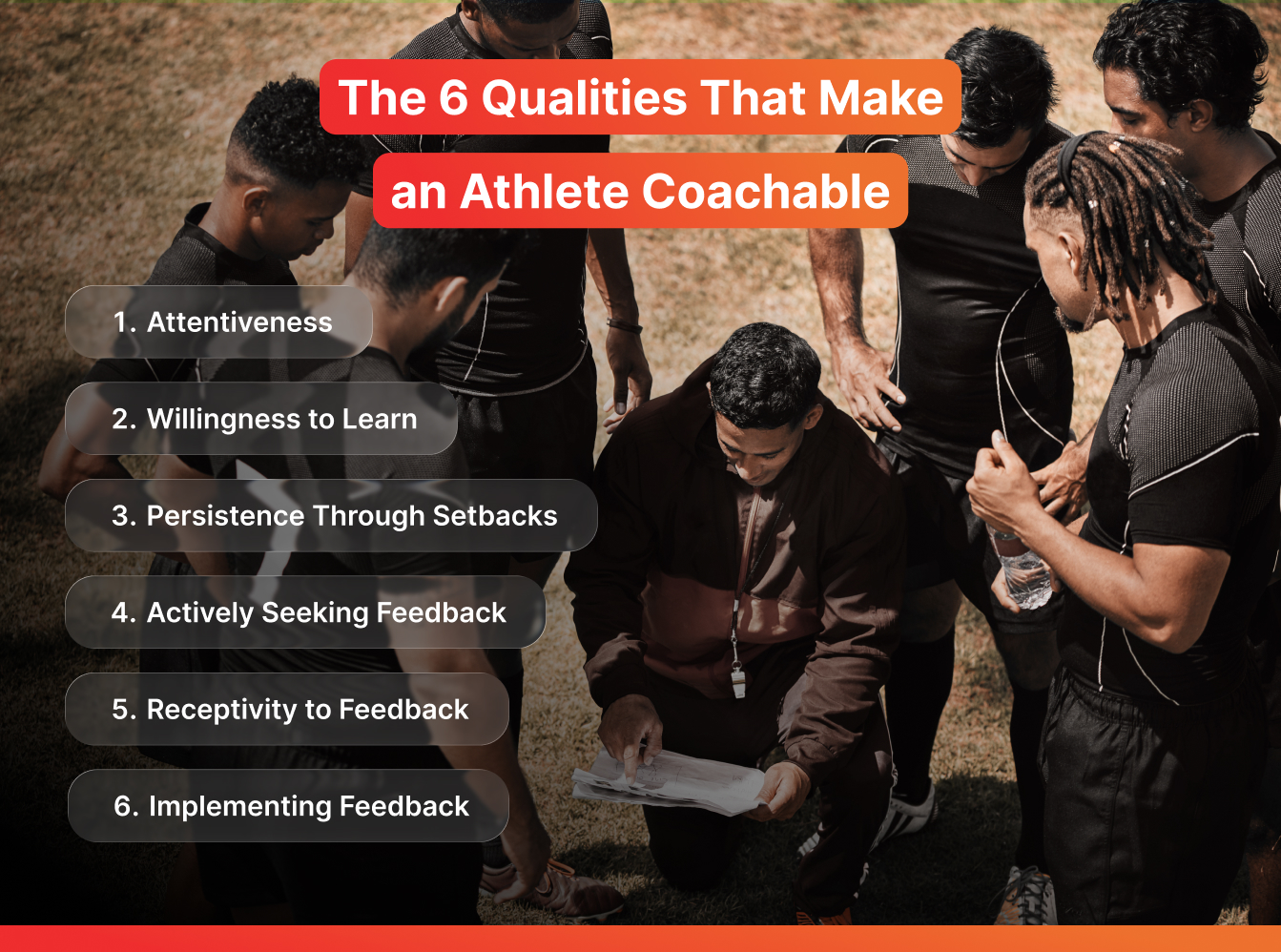
The 6 Qualities That Make an Athlete Coachable
1. Attentiveness
Coachability starts with paying attention - attentive athletes are fully present. They observe what's happening around them in practice. They pick up on cues (whether from their coach or their own body), and they process that information actively rather than passively.
In practical terms, this is the athlete who watches the video feedback you send, actually thinks about it, and asks follow-up questions.
What coaches can do: Make it easier for athletes to be attentive by giving them something concrete to focus on. A 30-second video clip focused on one specific thing is far easier to absorb than a five-minute video. In CoachNow, delivering focused, visual feedback directly to your athlete's phone means they can replay it as many times as they need.
2. Willingness to Learn
Willingness to learn means staying genuinely open to new information and approaching training with curiosity.
Being willing to learn new things and adapt your training as needed is the single biggest difference between more coachable and less coachable athletes. The athlete who stays curious, even after years of experience, keeps getting better.
What coaches can do: Frame feedback as discovery rather than correction. Instead of "you're doing this wrong," try "let's look at what's happening here." Tools like Versus Mode in CoachNow help you easily show athletes, side-by-side, what a small change actually looks like.
3. Persistence Through Setbacks
Highly coachable athletes understand that improvement isn’t normally linear. They understand that there’s almost always a learning curve with a new skill, yet they push through it anyway. They trust the process.
Persistence takes time to build, but ultimately has countless benefits for athletes both on and off the field.
What coaches can do: Make progress visible. When athletes can actually see how far they've come, setbacks feel less permanent. Spaces keep every video, every piece of feedback, and every milestone in one place so athletes always have evidence of their own growth to look back on (which is especially important during frustrating setbacks).
4. Actively Seeking Feedback
The most coachable athletes don't just wait for feedback - they go looking for it.
They understand that every session with their coach is an opportunity to learn something useful.
Coaching is a two-way relationship - a coach can only give so much before the athlete has to engage. Athletes who actively seek feedback create more coaching moments, and more coaching moments mean faster development.
What coaches can do: Build feedback-seeking into your workflow. When athletes submit videos through CoachNow, they're already practicing this habit.
You can encourage it further by creating a regular rhythm: a weekly check-in post, a prompt for athletes to share what they noticed in their last session, or a simple question to answer when they submit footage.
5. Receptivity to Feedback
Seeking feedback is one thing, but actually receiving it well is another.
Being receptive to feedback is simple in theory: hear a correction, stay open, don't take it personally.
In practice? It's one of the hardest things to master.
Feedback often feels personal, even when it isn't. But much like the qualities we’ve mentioned above, receptivity is also a skill that can be learned and improved upon.
What coaches can do: Delivery matters as much as content. Asynchronous video feedback gives the athlete time to watch your analysis on their own time. When an athlete can pause, rewatch, and sit with feedback before responding, they're far more likely to actually absorb it. Voice Over in CoachNow adds warmth to that feedback, so it comes across as supportive.
6. Implementing Feedback
This is the one that counts.
Everything we mentioned above only matters if it results in actual change. A truly coachable athlete takes what their coach says, applies it to their training, and has something to show for it.
Implementing feedback is where talent and coachability intersect most. An athlete with average ability who implements feedback consistently will outperform a talented athlete who doesn't, every time. Over months and years, the gap becomes enormous.
What coaches can do: Make implementation easy to track and easy to celebrate. When an athlete submits a video showing they've improved one of their skills, acknowledge it specifically. Use Versus Mode to show them the before and after side-by-side and let them see the evidence of their own effort. That kind of visible feedback loop reinforces the habit and makes athletes want to keep doing it.
Coachability Is a Two-Way Street
As important as it is for an athlete to be coachable, as their coach, you also have to make it easy for them to be coachable.
Are you delivering feedback in a way that's clear and easy to digest? Are you creating an environment where asking questions feels safe? Are you showing them their progress?
Coachability doesn't happen in a vacuum. The best coaches actively cultivate it through the quality of their feedback, the consistency of their communication, and the tools they use to make progress accessible.
With the right environment and the right support, any athlete can become more coachable, directly impacting their success.

Frequently Asked Questions
What does it mean for an athlete to be coachable?
Coachability is an athlete's willingness and ability to seek, receive, and act on feedback to improve their performance.
Is coachability a personality trait or something that can be learned?
Coachability can be taught and nurtured with the right coaching environment and consistent practice.
How can coaches help athletes become more coachable?
Coaches can improve athlete coachability by delivering clear feedback, creating a safe environment, and making progress visible over time.
What is the most important quality of a coachable athlete?
Implementing feedback is often considered the most important. An athlete who listens well and seeks feedback but never changes how they perform hasn't fully closed the coaching loop.