

You gave the same cue three sessions in a row.
Every time, your athlete went right back to making the same mistake.
Sound familiar?
Here's the truth: the problem usually isn't your coaching. It's the format your feedback is being delivered in.
Verbal feedback is the default for most coaches. It's fast, it's easy, and it feels natural. But there's a reason some athletes absorb corrections immediately while others seem stuck in the same loop. The missing piece of the puzzle is whether or not they can actually see what you're talking about.
Let’s dive in.

The Importance of Verbal Feedback
Verbal feedback isn't going anywhere, and it shouldn't. It's immediate, it's personal, and when it's well-timed, it can produce a real-time correction that nothing else can replicate.
A quick cue in the middle of training like "stay tall," or "shoulders back” can put an athlete into the right position before a bad habit has a chance to form.
But verbal feedback alone can only do so much.
Athletes can't see themselves move.
Often, what they sense happening is actually completely disconnected from what's really happening. That gap between perception and reality is one of the biggest obstacles to improvement in any sport. We’ve covered this concept of “Feel vs Real” at length in this blog.
Verbal feedback also fades fast. By the time your athlete gets home, they’ve forgotten the majority of what you said during practice. By the time your next session rolls around, you’re basically starting from square one again.
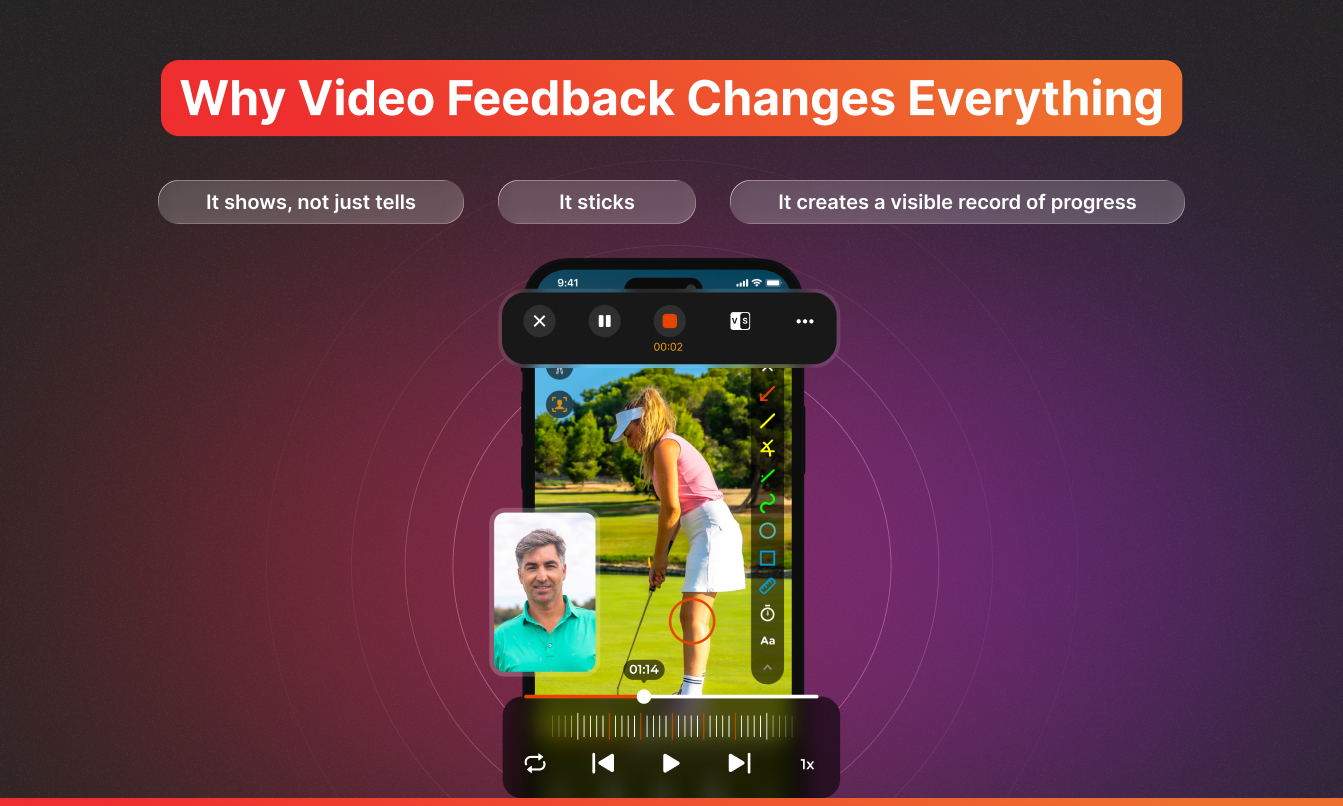
Why Video Feedback Changes Everything
Video feedback doesn't replace verbal feedback. Rather, it reinforces it.
When an athlete watches footage of their own movement, something shifts. Finally seeing the mistake they’ve been making with their own eyes holds way more weight than your continual verbal corrections.
There are a few key reasons why video feedback is so important:
-
It shows, not just tells. Seeing your own movement in slow motion is a game-changer when it comes to fully understanding what you’re doing and how to correct it.
-
It sticks. Athletes who watch their training (and your feedback) remember it better. When they’re practicing on their own and need a reminder, it’s already there waiting for them.
-
It creates a visible record of progress. When you’re training day in and day out, it’s hard to realize how much progress you’re actually making. By uploading videos in CoachNow, you have everything in one place to help you remember just how far you’ve come.
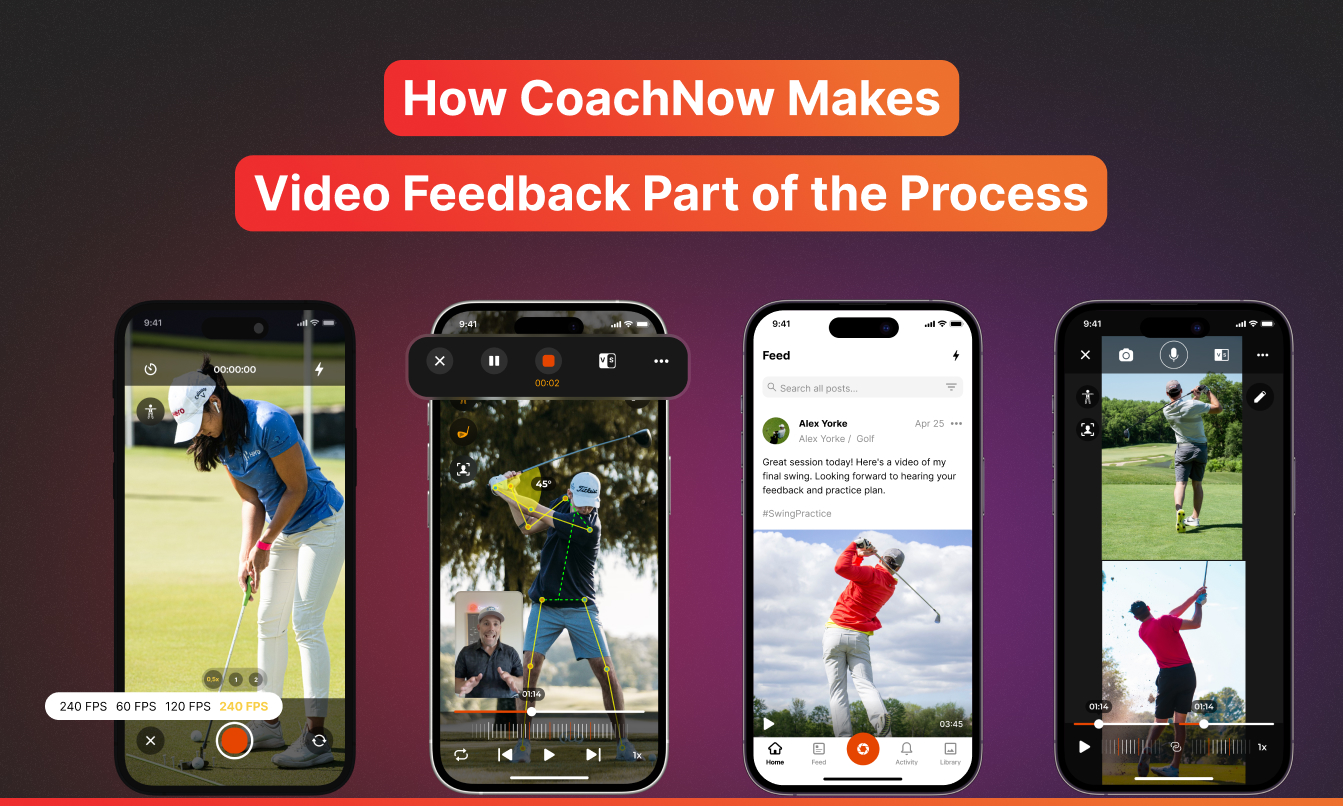
How CoachNow Makes Video Feedback Part of the Process
When you’re coaching countless hours every week and are already spread thin, providing video feedback to your athletes can feel like too much work.
But CoachNow simplifies video analysis with:
-
Slow Motion: Break down every movement and deliver feedback with pinpoint accuracy every time, up to 240 FPS.
-
AI-Enabled Skeleton Tracking: Get precise insight into any movement with real-time angle overlays at the tap of a button and see the unseen.
-
Annotation Tools: Use angles, shapes, timers, and text to provide technical feedback, keep your athlete hyper-aware of their form, and eliminate confusion.
-
Voice Over + CoachCam: Add your voice to any video or photo. With CoachCam, you can even include live recordings from your device camera to ensure understanding.
When the session is over, everything lives in your athlete's Space: your training space to communicate one-on-one with your athletes. Create posts, analyze videos, and give feedback in a secure, private channel dedicated solely to your athlete's improvement.
With Versus Mode, you can put two videos or images side by side and compare them directly, whether that's with the same athlete past and present, or a comparison to a more advanced player.
Verbal feedback will always have a place in coaching. But if it's the only tool you're using, you're not helping your athletes grow as fast as they could be.
Video feedback gives athletes something words can't - the ability to see themselves clearly. When athletes can close the gap between their “Feel vs Real”, they progress *that* much faster.
The coaches who see the fastest improvement are the ones who communicate most effectively, both in-person and asynchronously, using tools like Spaces, Groups, and Lists to do the heavy lifting.
Frequently Asked Questions
Does video feedback actually help athletes improve faster?
Yes. Athletes learn and retain corrections more effectively when they can see their own movement rather than simply hearing a description of it. Video feedback removes the guesswork and makes corrections concrete.
When should I use verbal feedback vs. video feedback?
Use verbal feedback for real-time corrections during a drill or session. Use video feedback to reinforce those cues, make corrections clear, and give your athlete something they can come back to and review on their own.
How do I deliver video feedback without it taking up a ton of time?
With CoachNow, it takes minutes. Upload the clip, annotate or record a voice-over directly in the app, and send it straight to your athlete's Space.
What if I coach remotely?
Video feedback is one of the most powerful tools for remote coaching. CoachNow keeps the quality of your coaching consistent regardless of the distance.